Angel's Envy, Three Ways: Bourbon, Triple Oak, and Rye Compared

Angel's Envy has built its whole identity around finishing — taking already-solid whiskey and giving it extra time in a second barrel to pick up layers it wouldn't get otherwise. Lincoln Henderson started the project, and you can still taste that "let's see what happens if we push this a little further" philosophy across the lineup. I sat down with the Straight Bourbon, the Triple Oak, and the Finished Rye side by side, and what struck me most is how differently the same basic idea — finishing in port, rum, and various oak barrels — plays out depending on what's underneath it.
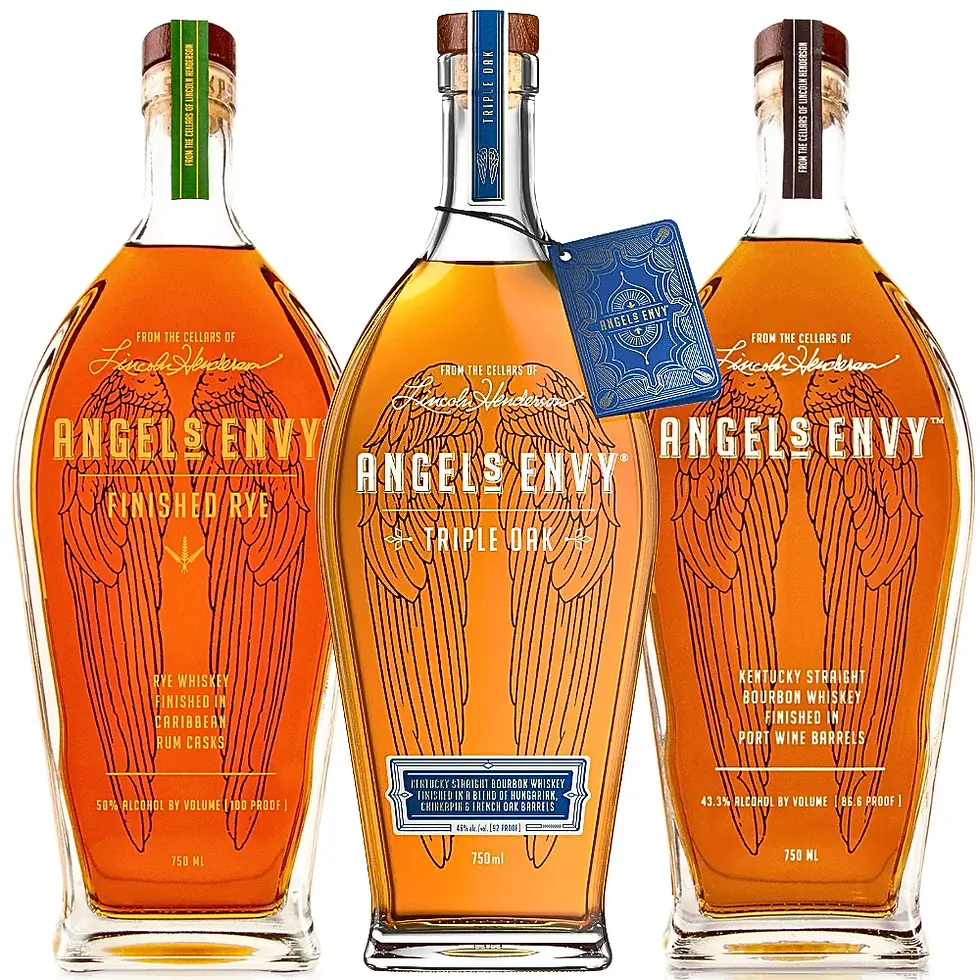
Angel's Envy Straight Bourbon
This is the one that started it all, and it's worth tasting first because it sets the baseline for everything else. It's a bourbon finished for three to six months in port wine barrels, and that finish is doing real work here — it's not subtle.
On the nose, you get caramel and vanilla up front like you'd expect from bourbon, but then there's this dried-fruit sweetness — raisin, fig, maybe a little plum — that's clearly the port talking. There's also a faint floral note that I find kind of charming, almost like potpourri in the best way.
The palate is where it gets interesting. It comes in soft — almost gentle for a 86-proof-ish bourbon (it's bottled around 80-90 proof depending on the batch) — with brown sugar and toasted oak, then that port wine character rolls in with berry and dark fruit sweetness. Some people find it almost too sweet, like dessert in a glass, and I get that critique. But I think the balance works if you're not expecting a big, brawny, rye-forward bourbon. This is bourbon for people who like a little wine bar mixed into their whiskey bar.
Finish is medium length, fruity, a little oaky, fades clean. It's an easy sipper and honestly a great gateway bottle for someone moving from wine into whiskey.
Angel's Envy Triple Oak
This is the newer, more ambitious sibling. Where the Straight Bourbon does one finish, Triple Oak does three: the bourbon spends time in new charred oak, then toasted oak, then American oak barrels that previously held Calvados — French apple brandy. It's a layered approach, and you can taste the extra complexity, for better and occasionally for worse.
Nose-wise, this one's noticeably more orchard-driven than the Straight Bourbon. Baked apple, pear, a little cinnamon, and a deeper, more toasted oak presence than its sibling. It smells warmer, spicier, less like fruit candy and more like fruit pie.
On the palate, the apple and oak spice carry through, with vanilla and caramel still present but playing more of a supporting role here than in the original. There's a toastiness — almost like graham cracker or baked good crust — that I really like, and it gives the whole thing a roundness the Straight Bourbon doesn't quite have. The finish is longer too, with the oak tannins lingering a bit and the apple brandy character showing up late, almost like a final flourish.
If the Straight Bourbon is sweet and fruity in a port-wine way, Triple Oak is sweet and spiced in an apple-orchard way. It's the more "serious" whiskey of the two bourbons, in my opinion — more going on, more places for your palate to explore, though it occasionally feels like it's trying to do a lot, if not too much, at once.
Angel's Envy Finished Rye
Now for the wild card. This is where Angel's Envy departs from the bourbon-finished-in-wine-or-fruit-barrel formula and does something genuinely different: a rye whiskey (sourced, like the others, primarily from MGP (Midwest Grain Products) in Indiana, with Angel's Envy's own Kentucky-distilled rye increasingly part of the blend) finished in Caribbean rum casks.
The nose tells you immediately this isn't bourbon. There's the expected rye spice — black pepper, a little clove — but it's wrapped in this tropical, almost molasses-forward rum sweetness. Banana, brown sugar, a little funk in a good way. It smells more like a tiki bar than a bourbon bar, honestly, and that's not a knock.
The palate is where this bottle really earns its reputation. Rye spice hits first — that characteristic bite and a kind of herbal, almost minty edge that rye drinkers chase — and then the rum finish comes in with tropical fruit, brown sugar, and a viscous, almost oily mouthfeel that makes it feel richer than its proof would suggest. There's baking spice too, cinnamon and clove, that ties the rye grain and the rum finish together really well. It doesn't taste like two things awkwardly stacked; it tastes integrated, like the rum barrels found exactly the right complement to the rye spice instead of fighting it.
The finish is long, warm, a little peppery at the back end, with that rum sweetness trailing off last. This is the bottle I'd hand to someone who claims they "don't like rye" — the rum finish softens rye's sharper edges without erasing what makes rye, well, rye.
How They Stack Up Against Each Other
If you lined these up blind, the differences would be obvious fast. The Straight Bourbon is the lightest and most purely fruity-sweet of the three — port wine is doing one clear job and doing it well. Triple Oak takes that same bourbon base and adds complexity and spice through its three-barrel process, trading a little drinkability for more nuance. And the Finished Rye is the outlier of the group — different grain, different finishing spirit entirely — and it's the one that surprises people most, because rum and rye turn out to be a genuinely excellent pairing.
My honest ranking, for what it's worth: the Finished Rye is the most interesting and the one I'd reach for again, the Triple Oak is the most "whiskey nerd" of the bunch and rewards slow sipping, and the Straight Bourbon — while the most divisive among purists — is the most approachable and probably the best entry point if you're newer to bourbon or finished whiskeys generally.
All three share that Angel's Envy signature, though: nothing here is trying to be a traditional, oak-and-corn bourbon. They're whiskeys built around the finish, and whether that's your thing or not probably determines which bottle on this list you'll love most.


Comments